What Is Nm to Ft-Lbs? A Beginner's Guide to Torque Conversion
Table of Contents
This guide explains what the units mean, starting from scratch. If you just want the arithmetic, see how to convert Nm to ft-lbs by hand; for a side-by-side comparison of the two units, see Nm vs ft-lbs.
What Does “Nm to Ft-Lbs” Actually Mean?
Picture this: you’re in the garage, ready to tighten your car’s lug nuts, and the owner’s manual says 120 Nm. You grab your torque wrench, but the dial only reads ft-lbs. Now what?
If you’ve ever found yourself staring at two different torque units and wondering what Nm to ft-lbs even means, you’re not alone. Millions of DIYers, home mechanics, and students face this exact confusion every day.
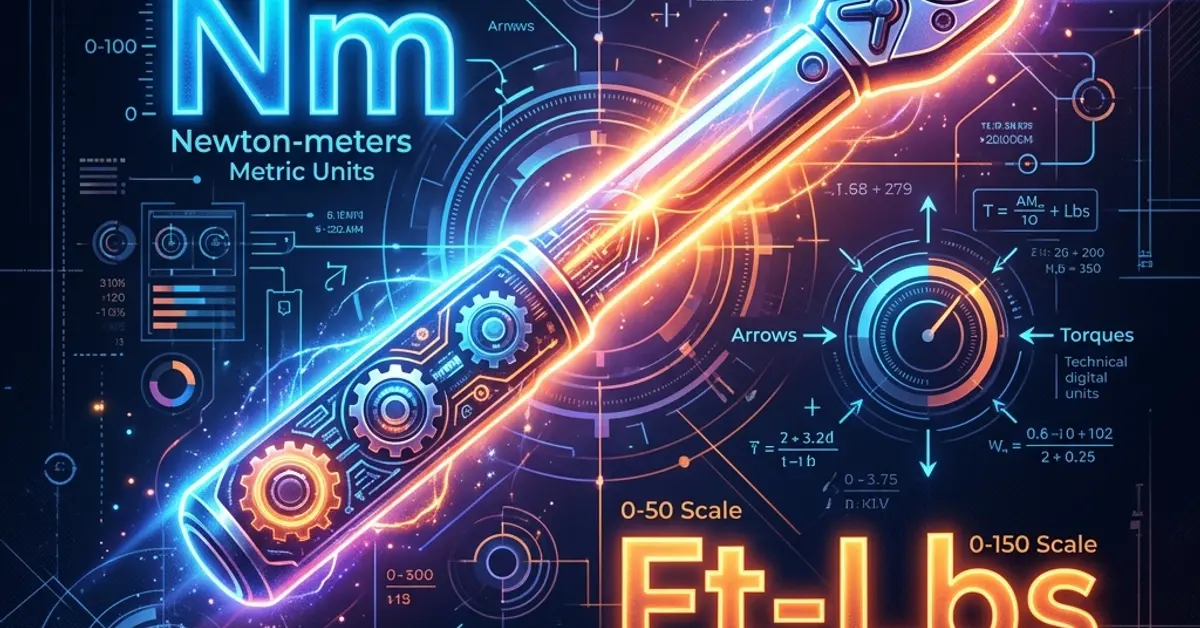
Nm stands for Newton-meters, the metric unit of torque used across most of the world. Ft-lbs stands for foot-pounds, the imperial unit of torque dominant in the United States. Both measure the same physical quantity, rotational force, but they use completely different scales, which is why conversion is necessary.
Two units exist because the world never fully agreed on one measurement system. Europe, Asia, and most of the globe adopted the metric system. The United States held onto the imperial system. The result? Two sets of numbers for the same job.
By the end of this guide, you’ll understand exactly what torque is, how Nm and ft-lbs differ, the precise formula to convert between them, and you’ll have a ready-to-use reference chart that covers the most common torque specs you’ll encounter. Let’s get started.
What Is Torque? (And Why Does It Matter?)
The Simple Definition
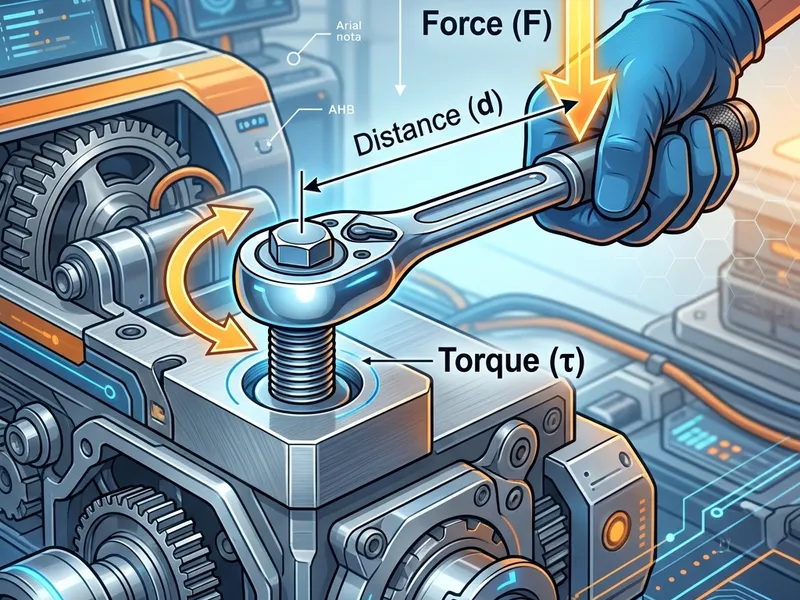
Torque is rotational force, the twisting power you apply when turning a bolt, a nut, or any fastener. If you’ve ever used a wrench, you’ve applied torque.
Here’s the easiest way to think about it: imagine tightening a bolt with a wrench. The longer the wrench, the more torque you generate with the same amount of effort. That’s because torque is the product of two things:
Torque = Force × Distance
The force is how hard you push or pull. The distance is how far your hand is from the bolt (the length of the wrench). Multiply the two, and you get torque.
Why Torque Matters in the Real World
Torque isn’t just a physics concept: it has direct, practical consequences for anything you build or repair:
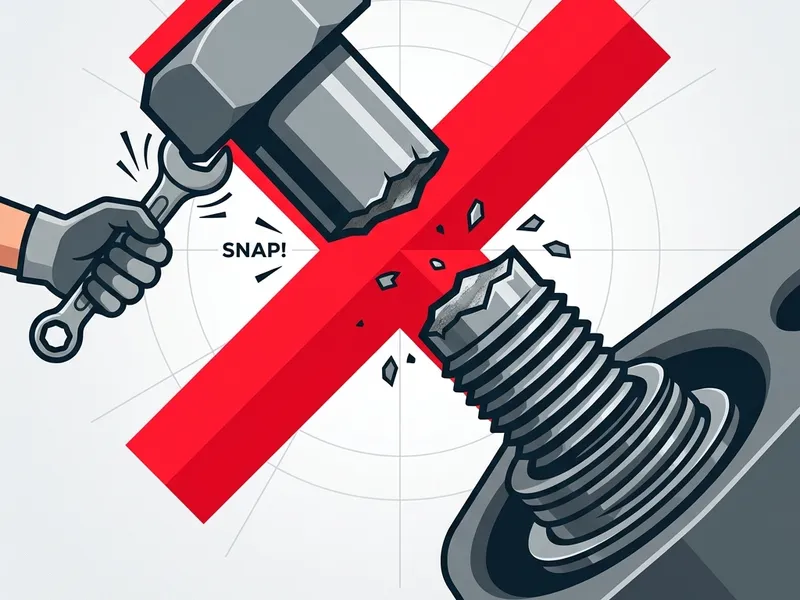
- Over-tightening a bolt can strip the threads, crack the material, or snap the fastener entirely.
- Under-tightening means the bolt can work itself loose over time, a terrifying thought when we’re talking about wheel lug nuts at highway speed.
- Getting torque right is the difference between a safe, reliable assembly and mechanical failure, safety risks, and expensive repairs.
Quick Real-World Examples
Torque specs come up more often than you might think:
- Lug nuts on a car wheel, typically 80–150 Nm depending on the vehicle
- Spark plug installation, usually 15–30 Nm (over-tighten these and you’ll crack the porcelain)
- Bicycle stem bolts, often just 5–7 Nm (a torque wrench is essential here)
- IKEA furniture assembly: you might not use a torque wrench, but you’ve felt the difference between “snug” and “stripped”
What Is a Newton-Meter (Nm)?
Definition
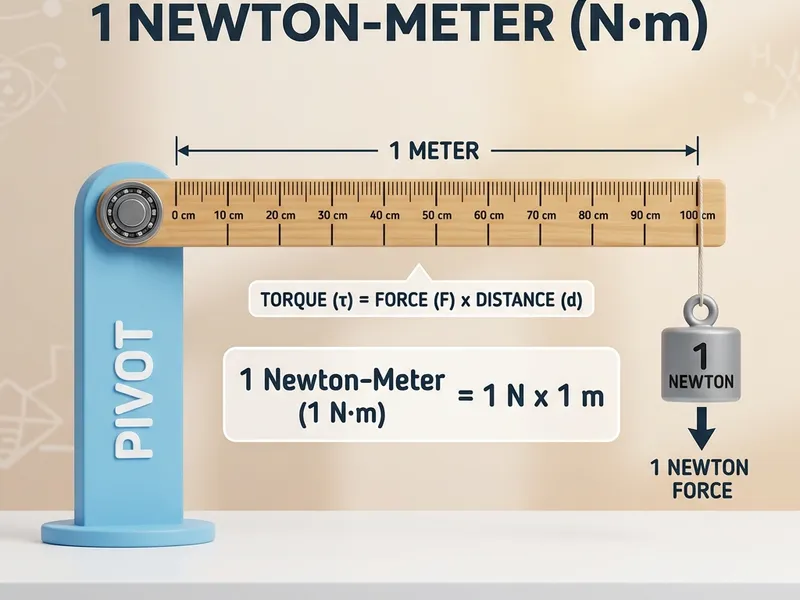
A Newton-meter (Nm) is the standard metric unit of torque. Specifically:
1 Nm = 1 Newton of force applied at a distance of 1 meter from the pivot point.
Newton-meters are part of the SI (Système International) system, the internationally agreed-upon standard of measurement used by virtually every country outside the United States.
Where You’ll See Nm Used
If you encounter torque specs from any of these sources, they’ll almost certainly be in Nm:
- European and Asian car manuals (BMW, Toyota, Honda, Volkswagen, etc.)
- Modern power tools, most electric impact drivers display torque ratings in Nm
- Engineering and science specifications worldwide
- Bicycle and motorcycle torque specs, the cycling industry is almost exclusively metric
What Does 1 Nm Feel Like?
For beginners, the numbers can feel abstract, so here’s a way to visualize it: holding a 100-gram weight (about the weight of a smartphone) at the end of a 1-meter stick produces roughly 1 Nm of torque at the pivot point.
To put it in perspective:
- 5 Nm, about right for a small electronic enclosure screw
- 25 Nm, typical for an oil drain plug
- 150 Nm, what you’d apply to a heavy-duty wheel bolt
What Is a Foot-Pound (Ft-Lbs)?
Definition
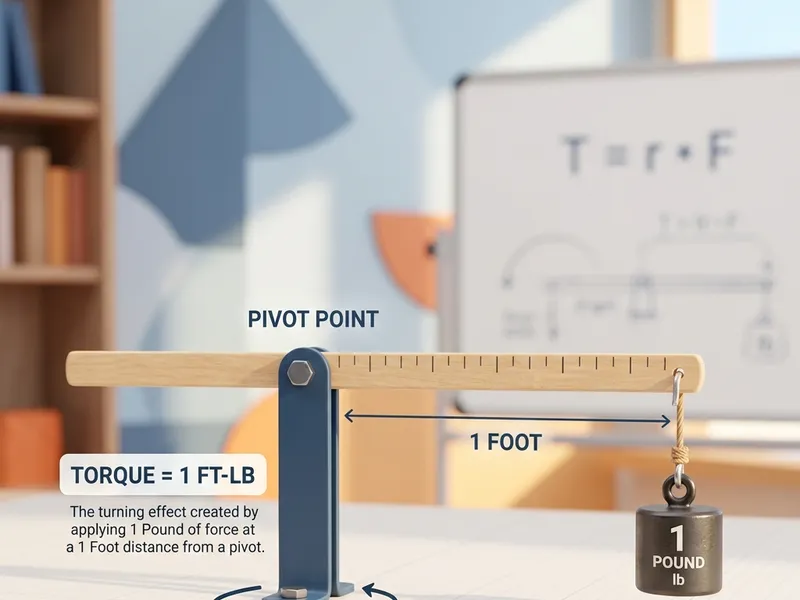
A foot-pound (ft-lb) is the imperial unit of torque used primarily in the United States. Specifically:
1 ft-lb = 1 pound of force applied at a distance of 1 foot from the pivot point.
Foot-pounds are part of the Imperial / US customary system, the measurement framework still dominant across American manufacturing, automotive service, and construction.
Where You’ll See Ft-Lbs Used
- American vehicle service manuals. Ford, Chevy, Dodge, and all US-market vehicles
- US-made torque wrenches, many older wrenches only display ft-lbs
- Construction and structural applications, steel erection, bridge bolts, heavy equipment
- Older machinery and equipment, legacy specs from decades of imperial-standard manufacturing
Ft-Lbs vs Lb-Ft. Are They the Same?
You might see torque written as either ft-lbs or lb-ft and wonder if there’s a difference. Here’s the deal:
- Technically, lb-ft (pound-feet) is the more correct engineering notation.
- In practice, ft-lbs (foot-pounds) is the universally used term in workshops, manuals, and conversation.
- Both mean the exact same thing. Don’t let the notation confuse you.
⚠️ Important: Ft-Lbs is NOT the same as lbf (pound-force). Pound-force is a measure of linear force, not rotational torque. They are completely different quantities.
Nm vs Ft-Lbs: What’s the Difference?
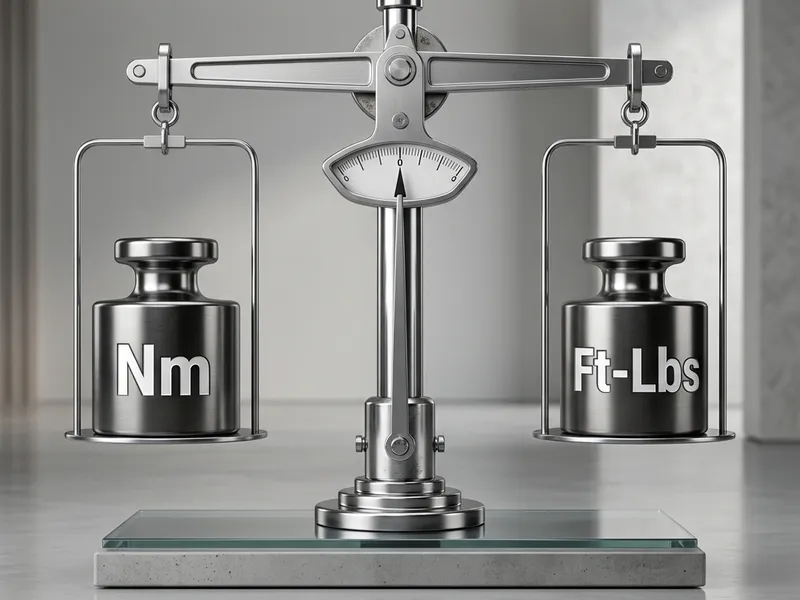
At the end of the day, Nm and ft-lbs measure the exact same physical property, torque. The only difference is the scale they use. Here’s a side-by-side comparison:
| Feature | Nm (Newton-Meter) | Ft-Lbs (Foot-Pounds) |
|---|---|---|
| System | Metric (SI) | Imperial (US) |
| Force Unit | Newton | Pound-force |
| Distance Unit | Meter | Foot |
| Common In | Europe, Asia, Global | USA, some UK |
| Example Use | Car manual from Germany | Ford F-150 service manual |
Two key takeaways:
- Both measure the exact same thing, just in different systems.
- Neither is more “accurate”: they are mathematically equivalent measurements expressed in different units.
How to Convert Nm to Ft-Lbs (The Formula)
The Conversion Factor
The relationship between Newton-meters and foot-pounds comes down to one precise number:
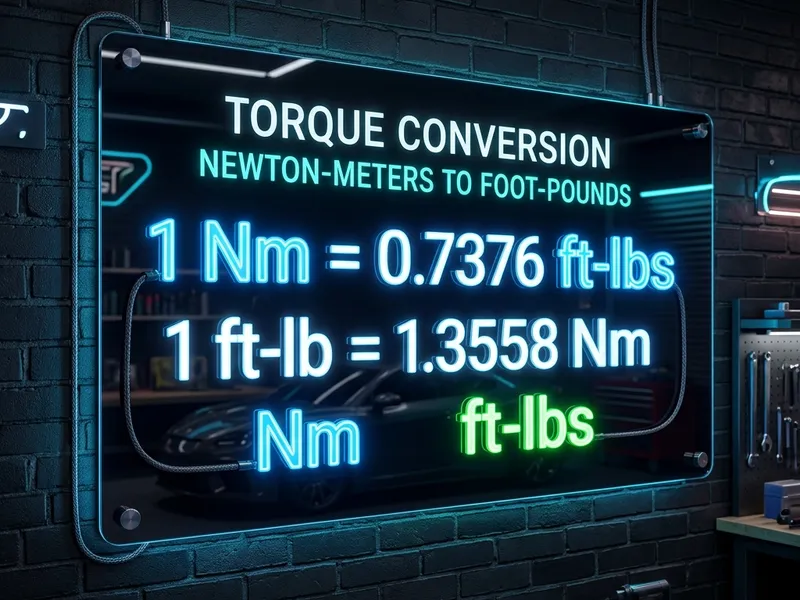
1 Nm = 0.7376 ft-lbs
1 ft-lb = 1.3558 Nm
Where does 1.3558 come from? It’s derived from the relationship between the underlying units: one foot equals 0.3048 meters, and one pound-force equals 4.44822 Newtons. Multiply those together (0.3048 × 4.44822) and you get 1.3558, the exact conversion factor. You don’t need to memorize how it’s derived; just knowing the number is enough.
Nm to Ft-Lbs Formula
To convert from Newton-meters to foot-pounds, use this formula:
ft-lbs = Nm × 0.7376
Step-by-step example:
Your car manual says to tighten the lug nuts to 100 Nm. Your wrench reads in ft-lbs. What do you set it to?
- Start with the spec: 100 Nm
- Multiply by 0.7376: 100 × 0.7376 = 73.76 ft-lbs
- Set your wrench to approximately 74 ft-lbs
Done. That’s all there is to it.
Ft-Lbs to Nm Formula (Reverse)
Going the other direction? Use the inverse formula:
Nm = ft-lbs × 1.3558
Step-by-step example:
A US YouTube tutorial tells you to torque a bolt to 50 ft-lbs, but your wrench is metric. What’s the Nm equivalent?
- Start with the spec: 50 ft-lbs
- Multiply by 1.3558: 50 × 1.3558 = 67.79 Nm
- Set your wrench to approximately 68 Nm
The Quick Mental Math Trick
Don’t have a calculator handy? Use this shortcut:
- Nm to ft-lbs: multiply by 0.74 (close enough for workshop estimates)
- Ft-lbs to Nm: multiply by 1.36 (or simply divide the Nm value by 0.74)
This rough estimate is accurate within about 0.5%, perfectly fine for most non-critical work. However, for safety-critical fasteners like head bolts, suspension components, or brake calipers, always use the full 0.7376 conversion factor or, better yet, our free Nm to ft-lbs converter.
Nm to Ft-Lbs Conversion Chart (Most Common Values)
Bookmark this table: it covers the torque specs you’re most likely to encounter:
| Nm | Ft-Lbs | Common Use |
|---|---|---|
| 10 Nm | 7.4 ft-lbs | Small screws, electronics |
| 20 Nm | 14.8 ft-lbs | Spark plugs (small engines) |
| 25 Nm | 18.4 ft-lbs | Oil drain plugs |
| 50 Nm | 36.9 ft-lbs | Brake caliper pins |
| 80 Nm | 59.0 ft-lbs | Lug nuts (small cars) |
| 100 Nm | 73.8 ft-lbs | Lug nuts (mid-size cars) |
| 120 Nm | 88.5 ft-lbs | Wheel bolts (trucks) |
| 150 Nm | 110.6 ft-lbs | Suspension components |
| 200 Nm | 147.5 ft-lbs | Axle / hub nuts |
| 300 Nm | 221.3 ft-lbs | Heavy drivetrain bolts |
💡 Tip: For any value not on this chart, just multiply the Nm by 0.7376 to get the ft-lbs equivalent, or use our instant converter tool at the top of the homepage. For a longer reference you can pin up in the garage, see the printable Nm to ft-lbs torque chart.

Why Does the World Use Both Nm and Ft-Lbs?
It all comes down to history.
In the 1960s, the international scientific community pushed for universal adoption of the SI (metric) system. Most of the world got on board. Europe, Asia, Africa, South America, and Oceania all switched to metric measurements, including Newton-meters for torque.
The United States, however, never fully made the transition. American industry, tooling, training, and infrastructure had been built around the imperial system for centuries. Retooling everything, from wrenches to textbooks to factory equipment, would have cost billions. So the US kept foot-pounds, and imperial measurements remained the standard in American workshops, service manuals, and engineering programs.
The result today? Mechanics and engineers constantly need to convert between the two systems. If you drive a German car in the US, your service manual says Nm, but your American-made torque wrench reads ft-lbs. If you’re an engineer working with a global supply chain, you’ll see both units on the same project. It’s an everyday reality, and exactly why understanding Nm to ft-lbs conversion is such an essential skill.

When Would You Need to Convert Nm to Ft-Lbs?
Common Beginner Scenarios
You’ll run into Nm-to-ft-lbs conversion more often than you might expect:
- Your car’s service manual is from a European brand (BMW, Mercedes, Audi, Volvo) and all the torque specs are in Nm, but your torque wrench only reads ft-lbs.
- You bought a Japanese motorcycle (Honda, Yamaha, Kawasaki) and the maintenance manual lists everything in Nm.
- You’re watching a US YouTube repair tutorial where the mechanic calls out specs in ft-lbs, but your metric torque wrench only shows Nm.
- An online torque specification database lists values in a different unit than what your tools display.
When Precision Really Matters
Not every conversion needs to be exact to four decimal places:
- Head bolts, wheel lug nuts, brake calipers, always use the exact conversion (0.7376). Safety is non-negotiable.
- Furniture assembly, non-structural DIY projects, a rough mental estimate (multiply by 0.74) is perfectly fine.
When NOT to Estimate
For safety-critical applications, never rely on mental math alone:
- Engine components, cylinder head bolts, connecting rod bolts
- Suspension and steering, control arm bolts, tie rod ends
- Braking systems, caliper bracket bolts, rotor mounting hardware
- Aerospace, every fastener in aviation has a precise torque spec for a reason
In these cases, always verify against the manufacturer’s official service manual and use a calibrated torque wrench.

How to Convert Nm to Ft-Lbs on a Torque Wrench
Here’s the practical, step-by-step process:
- Find the torque spec in your vehicle’s service manual (e.g. 95 Nm)
- Multiply by 0.7376 → 95 × 0.7376 = 70.1 ft-lbs
- Set your torque wrench to 70 ft-lbs
- Tighten until the wrench clicks: that click means you’ve hit the target torque
That’s the complete workflow. Spec → Convert → Set → Tighten.
What If My Wrench Has Both Scales?
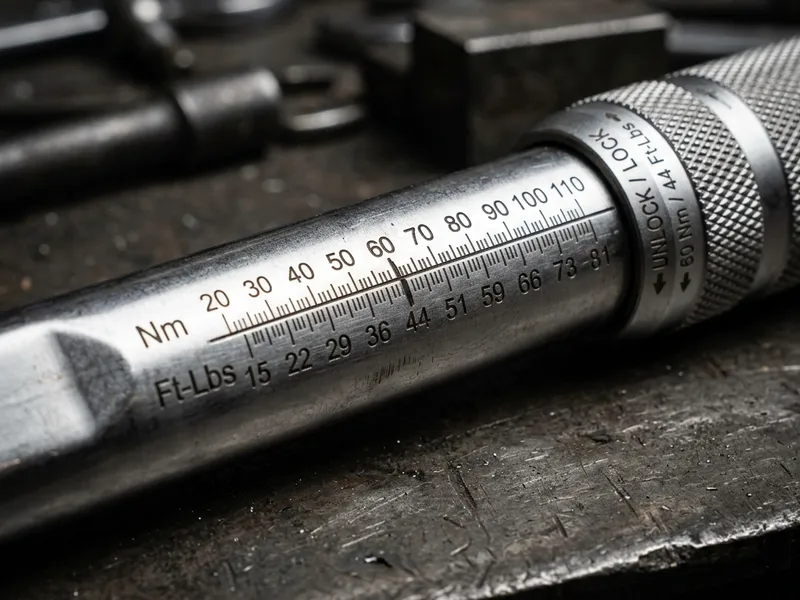
You’re in luck. Many modern torque wrenches display both Nm and ft-lbs on the same dial or digital screen. If yours does:
- Simply read directly from the correct scale, no math needed.
- Double-check which scale you’re reading. On dual-scale click wrenches, the inner scale is usually Nm and the outer scale is ft-lbs (but always confirm with your wrench’s documentation).
5 Common Nm to Ft-Lbs Mistakes (And How to Avoid Them)
Even experienced mechanics make these errors. Here’s what to watch out for:
1. Treating Nm and Ft-Lbs as Equal
100 Nm ≠ 100 ft-lbs. In reality, 100 Nm is only 73.8 ft-lbs. Assuming they’re the same unit will lead to dangerously over-tightened fasteners, a difference of nearly 27%.
2. Confusing Ft-Lbs with In-Lbs
Inch-pounds (in-lbs) are 12 times smaller than foot-pounds. If a spec says 60 in-lbs and you accidentally set your wrench to 60 ft-lbs, you’ll apply 12 times the intended torque. That’s a guaranteed broken bolt.
3. Using a Rounded Conversion for Precision Work
For casual work, multiplying by 0.74 is fine. But for safety-critical fasteners, always use the precise factor of 0.7376. That small difference can matter when you’re working on head bolts or brake components.
4. Ignoring the Torque Sequence
Some assemblies (like cylinder heads) require bolts to be tightened in a specific pattern and in stages, for example, 40 Nm first pass, 80 Nm second pass, then a final 90° angle turn. Converting the units correctly doesn’t help if you skip the sequence.
5. Not Rechecking After the Engine Warms Up
Thermal expansion can change how tight a bolt feels. Many manufacturer procedures call for a re-torque after the first heat cycle. Don’t skip this step, especially on head bolts and exhaust manifold studs.
Frequently Asked Questions About Nm to Ft-Lbs
Is 1 Nm equal to 1 ft-lb?
No. 1 Nm = 0.7376 ft-lbs. They are not equal, 1 Nm is about 26% less than 1 ft-lb.
Is 100 Nm the same as 100 ft-lbs?
No. 100 Nm = approximately 73.76 ft-lbs. Assuming they’re equal is a common and potentially dangerous mistake that can lead to over-tightening by nearly 27%.
What is the easiest way to convert Nm to ft-lbs in my head?
Multiply by 0.74. For example: 80 Nm × 0.74 ≈ 59 ft-lbs. This is accurate enough for most casual workshop tasks but should not be used for safety-critical applications.
Are ft-lbs and lb-ft the same thing?
Yes, in practice they refer to the same torque unit. The notation “lb-ft” is technically more correct from an engineering standpoint, but “ft-lbs” is the universally recognized term in workshops and service manuals.
What’s the difference between Nm and in-lbs?
1 Nm = 8.85 in-lbs. Inch-pounds are used for small, precise fasteners, things like electronics enclosures, small engine carburetor screws, and delicate bicycle components.
Why do American manuals use ft-lbs instead of Nm?
The United States never fully adopted the metric system. American tools, training programs, textbooks, and service documentation were all built around the imperial system, and the transition cost was considered too high. So ft-lbs remains the standard in US automotive and construction industries.
Can I damage my car by using the wrong torque unit?
Absolutely yes. Over-tightening (which happens when you use ft-lbs values where Nm was specified) can strip threads, crack castings, or snap bolts entirely. Under-tightening (the reverse error) can cause parts to loosen and fail during operation. Always double-check which unit your spec is written in before setting your torque wrench.
Now You Know What Nm to Ft-Lbs Means
Let’s recap the essentials:
- Nm (Newton-meters) and ft-lbs (foot-pounds) both measure torque, they’re just different unit systems.
- To convert Nm → ft-lbs: multiply by 0.7376
- To convert ft-lbs → Nm: multiply by 1.3558
- For quick mental math: Nm × 0.74 gets you close enough for non-critical work.
- Always use the exact formula for safety-critical applications like brakes, suspension, and engine components.
Bookmark the conversion chart above: it covers the 10 most common torque values you’ll encounter in automotive and DIY work.
Ready to convert a value right now? Head to our free converter, it’s instant, accurate, and works on any device. No app download required. Or if you prefer doing it manually, read our tutorial on how to convert Nm to ft-lbs by hand.